
South Dakota Statewide Rural Wildlife Crossings Study
Overview
South Dakota has many wildlife–vehicle crashes each year. These crashes cause injuries, deaths, and major vehicle damage. The Wildlife Crossings Study will help the state understand where these crashes happen and why they occur. The study will look at wildlife movement, road conditions, and crash history to find locations where safety improvements may help reduce collisions. The study will also support future planning so that roads are safer for both drivers and wildlife.
Reason for Study
South Dakota has a high number of wildlife–vehicle crashes each year. These crashes cause injuries, loss of life, major vehicle damage, and high costs for drivers. The purpose of this study is to better understand where these crashes happen and what factors contribute to them. The study will help identify locations where improvements may reduce crashes and make travel safer for both people and wildlife.
Background
Wildlife–vehicle crashes are a serious problem in South Dakota. Each year, thousands of drivers hit deer and other animals on our roads. These crashes damage vehicles, raise insurance costs, and lead to injuries and deaths. Earlier studies found that South Dakota has about 4,700 wildlife–vehicle crashes each year, with public costs of more than $100 million statewide. Researchers also estimate that more than 24,000 large animals are killed on roads in the state each year. These numbers show that wildlife–vehicle crashes affect both people and wildlife across South Dakota.
More recent research found that, from 2014 to 2018, South Dakota recorded nearly 23,000 wildlife–vehicle crashes. Based on this trend, drivers in the state have about a 1 in 116 chance of hitting an animal. These crashes also affect South Dakota’s economy. Healthy wildlife supports hunting and tourism, and the state sees an estimated $683 million in hunting related spending each year. Wildlife deaths from crashes put part of that economic activity at risk.
Past studies have recommended better ways to collect and share crash and carcass data, along with consistent methods to find problem areas on the road. Recent reports also created new tools and guidelines to help agencies plan and design projects that reduce wildlife–vehicle crashes.
This statewide Wildlife Crossings Study builds on that earlier work. The goal is to better understand where crashes happen, why they happen, and what kinds of improvements can help keep both drivers and wildlife safe.
If interested, you can find the past reports here:
Study Area
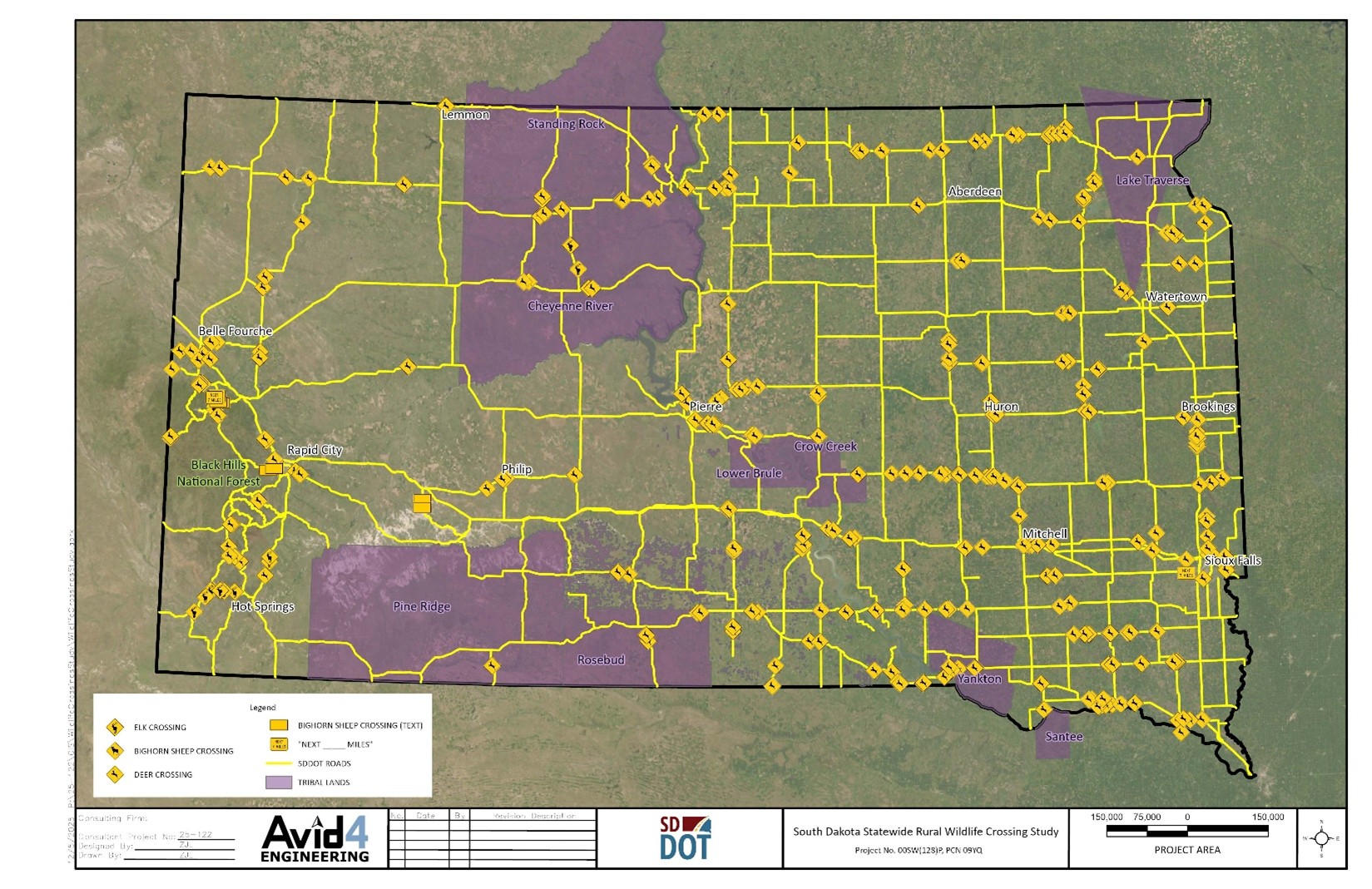
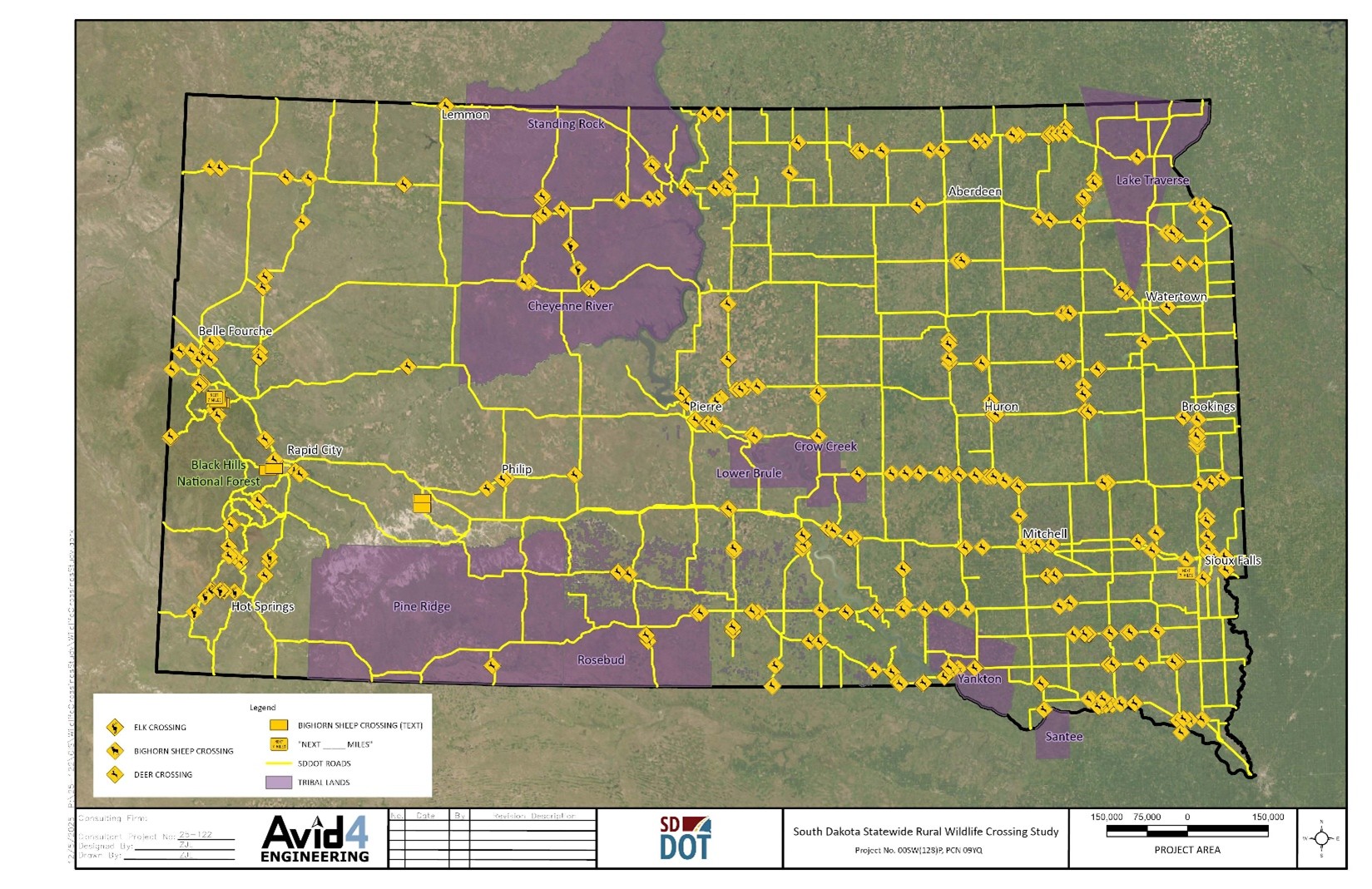
This study looks at wildlife–vehicle crashes on state maintained roads across all of South Dakota. The state has about 82,500 miles of roads, and 7,794 miles of those are state highways cared for by the South Dakota Department of Transportation. Even though state highways make up only about 9% of all road miles in the state, they carry about 68% of all the traffic. Because these roads serve most of the state’s travel, they are an important focus for understanding and reducing wildlife–vehicle crashes.
Public Involvement
Public involvement is an important part of the South Dakota Statewide Rural Wildlife Crossings Study. The study team will share information with the public, Tribal nations, and other groups throughout the project. This work follows federal public involvement requirements under SAFETEA LU, which means people will have chances to review information and give feedback at key points in the study.
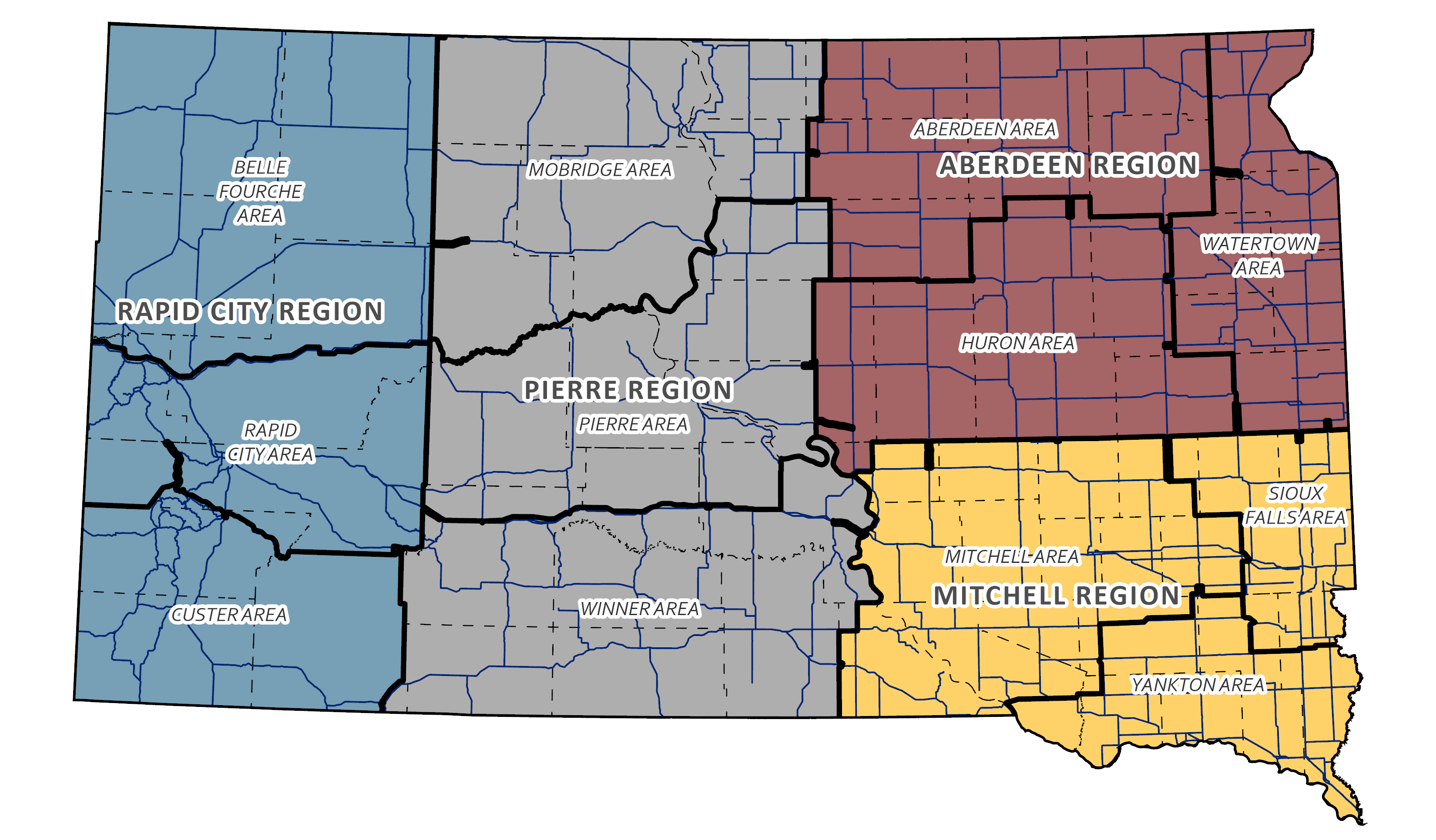
The study will include two virtual public meetings and four virtual stakeholder meetings. The stakeholder meetings will be organized by SDDOT Region: Rapid City, Pierre, Aberdeen, and Mitchell. Meeting notices, presentations, and recordings will be posted on this website as they become available.
The website will also include an interactive map. People can use the map to point out places where wildlife-vehicle crashes happen, where wildlife is often seen, and where safety improvements may be needed.
Public Meeting #1 – Location: Virtual, Date & Time: TBD
Study materials (presentations, handouts, display boards, etc. will be posted as they become available)
Study Advisory Team
The Study Advisory Team provides guidance and technical input throughout the South Dakota Statewide Rural Wildlife Crossings Study. The team includes representatives from SDDOT, the research team, and partnering agencies. The group meets at key points in the study to review information, discuss findings, and help ensure that the study reflects current practices, available data, and regional considerations. The Advisory Team’s feedback helps support the development of study materials, public meeting information, and the evaluation of potential wildlife vehicle conflict mitigation strategies.
Study Technical Memorandums
The Study Technical Memorandums document the methods, data, and analytical results developed throughout the South Dakota Statewide Rural Wildlife Crossings Study. These memorandums provide the technical foundation for understanding wildlife‑vehicle conflict patterns and evaluating potential mitigation strategies. As memorandums are completed, they will be posted on this webpage.
Anticipated topics include:
Data collection methods and data sources
Wildlife vehicle conflict analysis
Spatial and GIS based evaluations
Roadway and environmental conditions assessment
Screening and evaluation of potential mitigation strategies
Summary of technical findings used to support study recommendations
Contact Us
The SDDOT has retained the Wildlife Connectivity Institute to perform this study. For more information or comments, please contact: